
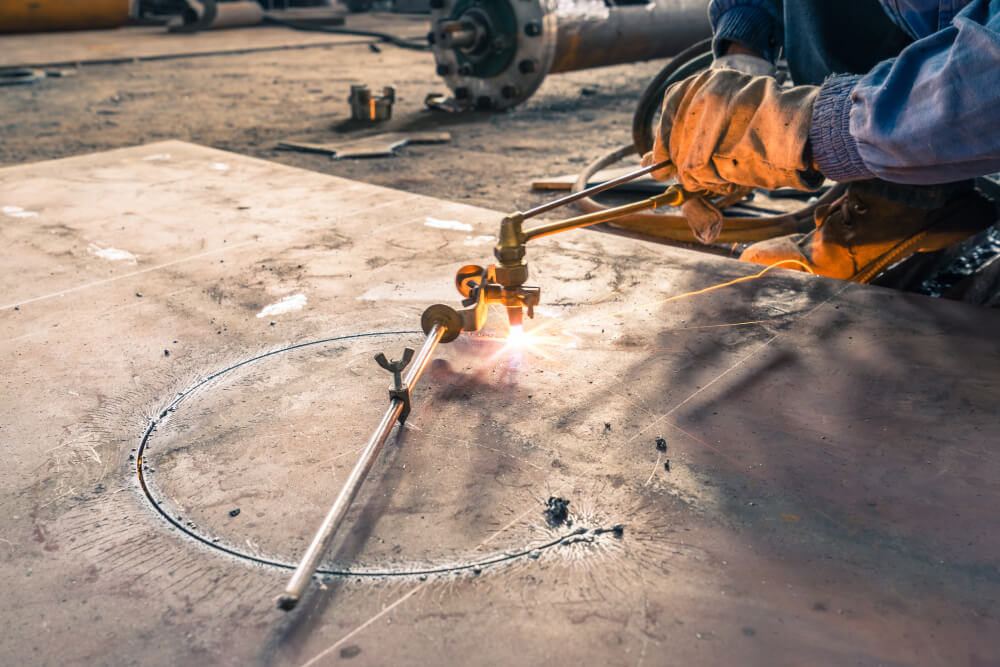
Not all metals are the same, and anyone who’s ever welded knows this first-hand. Each metal reacts differently to heat, requires different settings, and has its own quirks when it comes to strength, appearance, and durability. The three most common metals we weld here in Metro Vancouver are carbon steel, stainless steel, and aluminium. Let’s look at how they differ and why choosing the right approach matters for your project.
Carbon Steel – The Workhorse of Welding
Carbon steel is one of the most widely used metals in the welding world. It’s strong, affordable, and easy to work with. That’s why you’ll see it in everything from building frames and machinery to fences and custom fabrications.
The great thing about carbon steel is that it’s forgiving. It can handle a range of welding processes, MIG, TIG, or stick welding, and it doesn’t require much prep work. However, there’s one big downside: it’s prone to rust.
Here in Vancouver’s wet, coastal climate, that’s something you can’t ignore. If you’re using carbon steel outdoors or in damp environments, you’ll need to protect it with paint, coatings, or galvanization. Otherwise, corrosion can set in fast.
In short, carbon steel is strong and cost-effective, but it needs a little extra care to last in our local conditions.
Stainless Steel – Built for Strength and Corrosion Resistance
If you’ve ever seen a clean, shiny handrail or a food-grade countertop, you’re looking at stainless steel. This metal stands out for its strength and its resistance to rust and staining — a huge advantage in Vancouver’s damp air and salty coastal breeze.
Welding stainless steel, however, takes a bit more finesse. It retains heat longer than carbon steel, so if you’re not careful, it can warp or distort. Stainless also tends to show every heat mark or discoloration, which is something to watch for when appearance matters.
The key to welding stainless steel properly is managing heat and using the right filler materials. When done right, the result is both beautiful and incredibly durable — perfect for commercial kitchens, marine projects, or architectural designs.
Aluminium – Lightweight but Tricky
Aluminium is a completely different animal. It’s light, corrosion-resistant, and looks great, which makes it ideal for things like trailers, gates, and vehicle components. But welding is not as simple as grabbing a torch and going to work.
Unlike steel, aluminium has a much lower melting point and a thin oxide layer that melts at a higher temperature than the metal itself. That means the surface needs to be carefully cleaned and prepped before welding. If not, the weld can become weak and porous.
TIG welding is often used for aluminium because it gives better control and cleaner results. MIG welding can also work well for thicker pieces. The key is skill and precision — aluminium doesn’t give much room for error.
Choosing the Right Metal for the Job
Each of these metals has its strengths:
- Carbon steel is tough, strong, and affordable.
- Stainless steel is durable, corrosion-resistant, and clean-looking.
- Aluminium is lightweight and naturally resistant to rust.
The right choice depends on what your project needs — strength, appearance, corrosion resistance, or weight. And when it comes to welding, understanding how each metal behaves is the difference between a weld that lasts and one that fails over time.
Need Professional Welding in Vancouver?
At Vancouver Welding Inc., we work with carbon steel, stainless steel, aluminium, and other alloys every day. Our certified welders bring years of experience to every project, ensuring clean, strong, and reliable welds, whether it’s structural, industrial, or custom fabrication work.
We also offer mobile welding services across Metro Vancouver, including Burnaby, Surrey, Richmond, Coquitlam, and the North Shore. Whether you need on-site repairs or precision shop work, we’ll come to you, fully equipped to get the job done right.
Contact Vancouver Welding Inc. today to discuss your project and get a free quote. Our team is ready to help you build something that lasts.


